
Global Agrifood Crisis of 2026: Why Your Groceries are Skyrocketing
Published on 8/5/2026
Global Agrifood Crisis of 2026
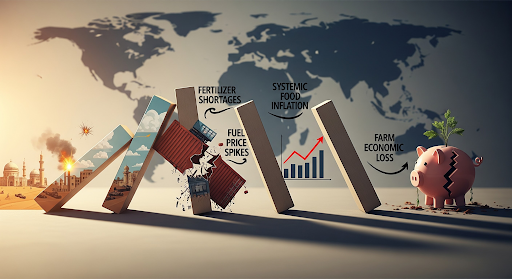
Think of the world’s food supply like a long row of falling dominoes. When something bad happens at the very beginning of the line, the effect eventually reaches the last domino: the food on your dinner table.
Right now, a war in the Middle East—specifically involving Iran—has knocked over the first domino. Because farmers globally rely heavily on resources sourced from that region, their production costs have surged. When the cost of farming rises, the cost of food also rises for consumers.[22]
TLDR
- Global Food Inflation: Projected to hit 4.4%.
- United Kingdom: Projected to experience 10.0% food inflation.[1]
- Farm Viability: Many farms will be unprofitable this year and may file for bankruptcy .
Key Inputs to Farming The starting point
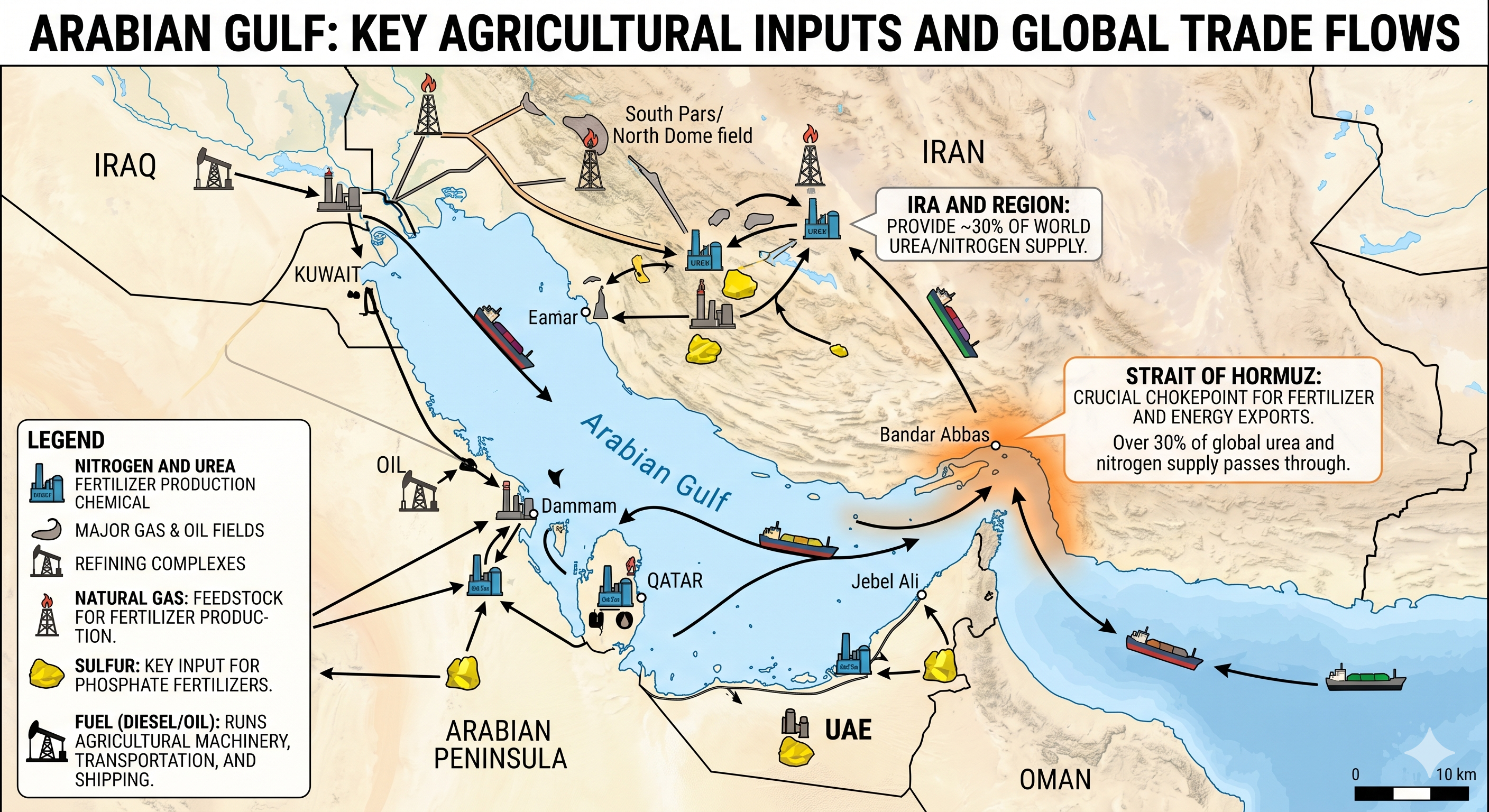
The Middle East effectively serves as a global warehouse for the “ingredients” needed to run a farm. Specifically, farmers depend on:
- Fertilizer (Nitrogen and Urea): The region provides between 30% and 35% of the world’s urea export supply.[2, 3] Urea is the most widely used nitrogen fertilizer globally for boosting crop yields.
- Natural Gas: Iran and its neighbors account for approximately 19% to 20% of the global trade in liquefied natural gas (LNG) . This gas is the “raw ingredient” required for the chemical process that creates nitrogen fertilizer.
- Sulfur: The Middle East is the source of 45% to 50% of the world’s seaborne sulfur trade . Sulfur is a vital component used to process phosphate rock into finished fertilizers.
- Fuel (Diesel and Oil): Roughly 25% to 27% of all maritime oil trade passes through the Strait of Hormuz . This oil is refined into the diesel that powers farm machinery and the bunker fuel used for the ships carrying food across the ocean.
Similar to the Russia/Ukraine war that began in 2022. While current 2026 fertilizer prices are approaching the peaks seen in 2022, economists note a dangerous difference in the impact on farmers. In 2022, the “pain” of high fertilizer costs was cushioned because crop prices were also at record highs, allowing many farmers to remain profitable. In 2026, however, crop prices are much lower, which is turning this shock into a direct profitability crisis where the cost of source materials now exceeds the value of the food produced.
Historical Global Food Inflation (2006–2027)
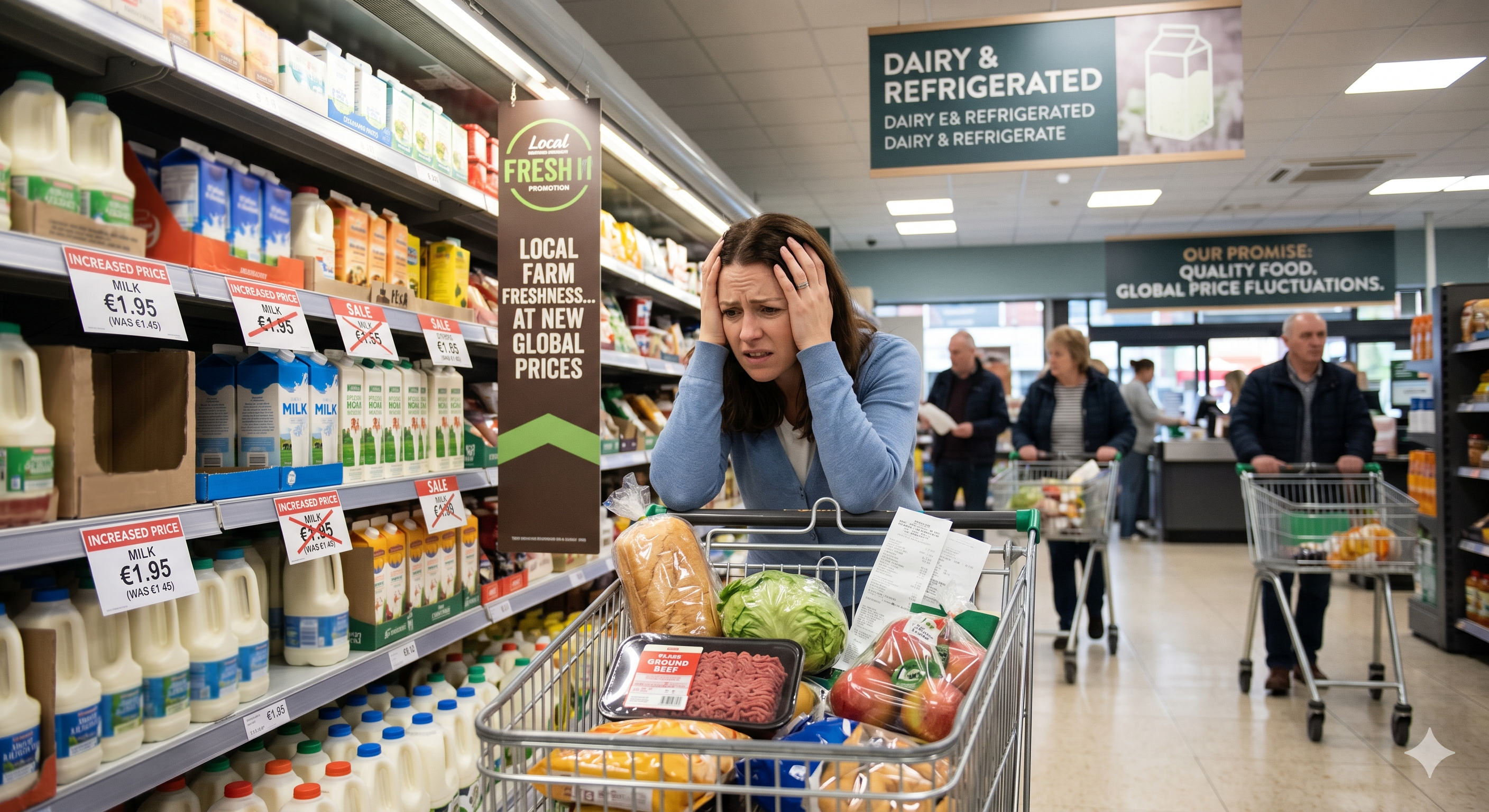
For a long time, food prices stayed mostly the same. But lately, the world has faced “shocks” like the COVID-19 pandemic, the war in Ukraine, and now the conflict in Iran.[22]
The following equation provides a simplified model for the estimated rise in the Consumer Price Index (CPI) for Food, factoring in the three variables requested:
ΔCPIfood = α(ΔPsupply loss) + β(ΔPfuel) + γ(ΔPfreight) + ε
Where:
- α, β, γ are the weighting coefficients for supply, energy, and logistics respectively.
- ΔPsupply loss is the loss is the percentage reduction in available crop volume (estimated at 5-15% globally).
- ΔPfuel is the increase in farm diesel/energy costs (estimated at 24-46%).
- ΔPfreight is the increase in global container/bulk shipping rates (estimated at 35.5%).
Applying these parameters, the UK’s Food and Drink Federation has revised its end-of-year inflation forecast from 3.2 percent to at least 9–10 percent. In Canada, food prices are projected to rise by 4 to 6 percent, adding an average of $1,000 per year to the grocery bill for a family of four.
Global Food Inflation Trends (2006–2027 Projections)
| Region | 2006–19 | 2020–22 | 2023–25 | 2026–27 (Fc) |
|---|---|---|---|---|
| Global Average | 2.5% [4] | 10.1% | 3.3% | 4.4% |
| United Kingdom | 2.1% [1] | 10.0% [1] | 3.2% [1] | 10.0% [1] |
| United States | 2.4% [5] | 10.4% [5] | 2.5% | 2.9% [5, 6] |
| Ireland | 3.3% | 7.8% | 2.2% | 3.6% |
| EU (Europe) | 1.5% | 9.2% | 2.5% | 3.4% |
| Africa | 4.5% | 11.0% | 9.0% | 9.4% |
| Latin America | 7.5% | 43.9% | 6.5% | 6.7% |
| Asia-Pacific | 1.5% | 4.0% | 2.6% | 3.7% |
| Australia | 2.7% | 7.3% | 3.5% | 3.9% |
Tracing the Costs: Why Your Favorite Foods Cost More
To understand why a steak or a bag of carrots costs more, we have to look at the “Trace Breakdown.” This shows how a problem in the Middle East travels all the way to your grocery store.[22]
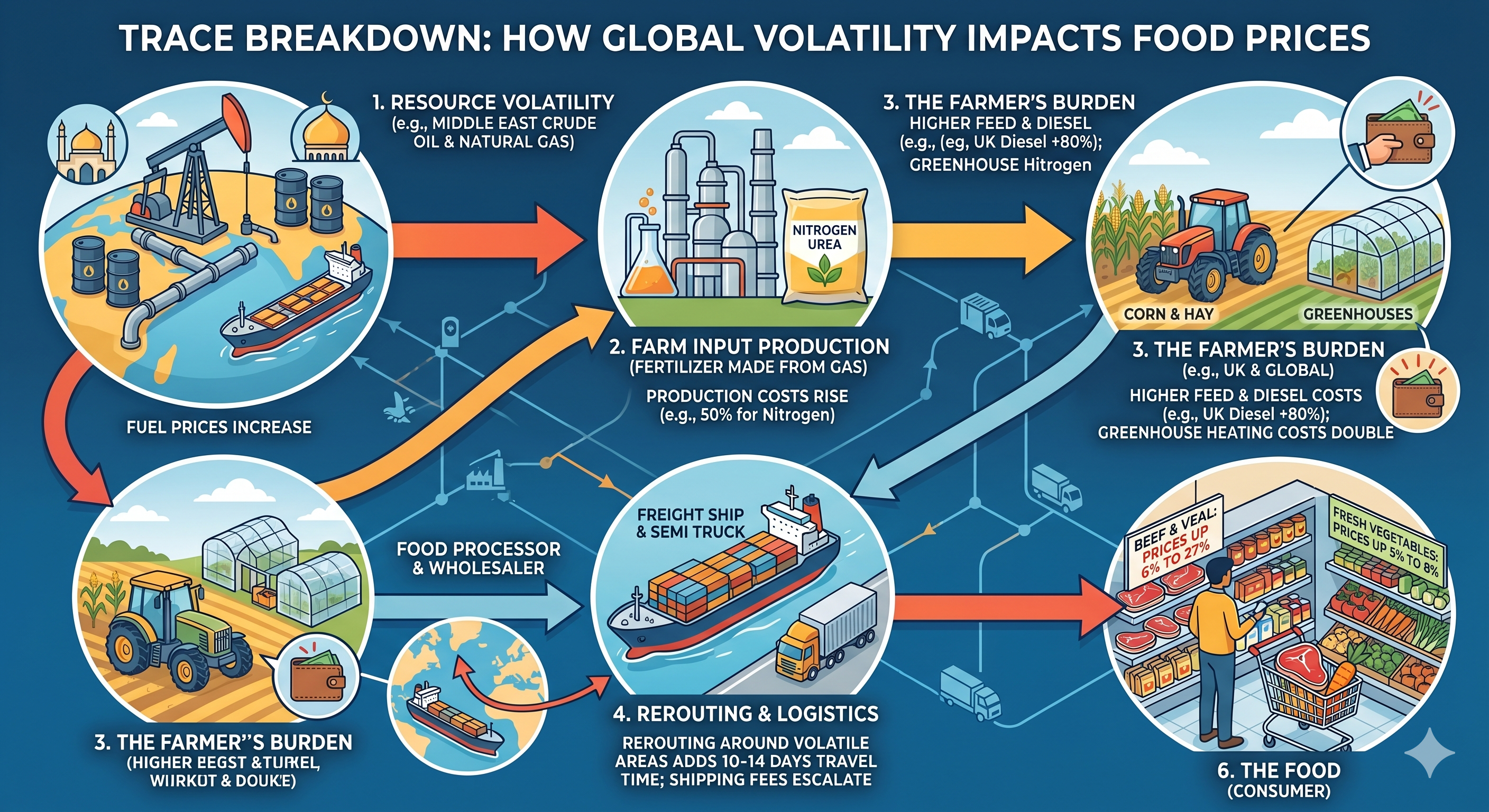
Beef and Veal
(Consumer Prices Forecast to Rise 6% to 27%)
- The Resource Supplier: It costs 50% more to make the nitrogen used to grow the corn and hay that cows eat.[7, 8]
- The Farmer: The farmer now pays much more for animal feed and “red diesel” to run the farm. In the UK, diesel costs have jumped 80%.[1, 9]
- The Food (Consumer): Because the cows were expensive to raise, the price of beef goes up at the store. In the UK, beef inflation is currently 27% .
Fresh Vegetables
(Prices Up 5% to 8%)
- The Resource Supplier: Rerouting ships around the war zone adds 10 to 14 days to travel times, increasing freight costs .
- The Farmer: Farmers who grow veggies in greenhouses have to pay double for the gas used to keep the plants warm.[1, 9]
- The Food (Consumer): Veggies like cucumbers and peppers are the first to get expensive because they go bad quickly and can’t wait for slow ships .
Farming operations and maintainence.
The “hidden tax” on every farm is energy.
-
Contractor Services: Farmers rely on contractors for heavy machinery work like harvesting and ploughing. In the UK and Ireland, these operators have been forced to raise their rates by between 4.8% and 20% to cover their own soaring fuel and labor bills.
-
Lubricants and Maintenance: Modern farming equipment needs more than just fuel. The price of lubricating oil has jumped by 20%, and essential servicing parts like filters have increased by 25%.
-
AdBlue and Chemicals: High natural gas prices have pushed the cost of AdBlue (required for modern tractor engines) to record highs.
-
Infrastructure Costs: Repairing a barn or building a new shed is also more expensive. Energy makes up roughly 40% to 45% of the cost of producing cement and steel, meaning even farm maintenance is now caught in the inflationary spiral.
Working at a Loss!
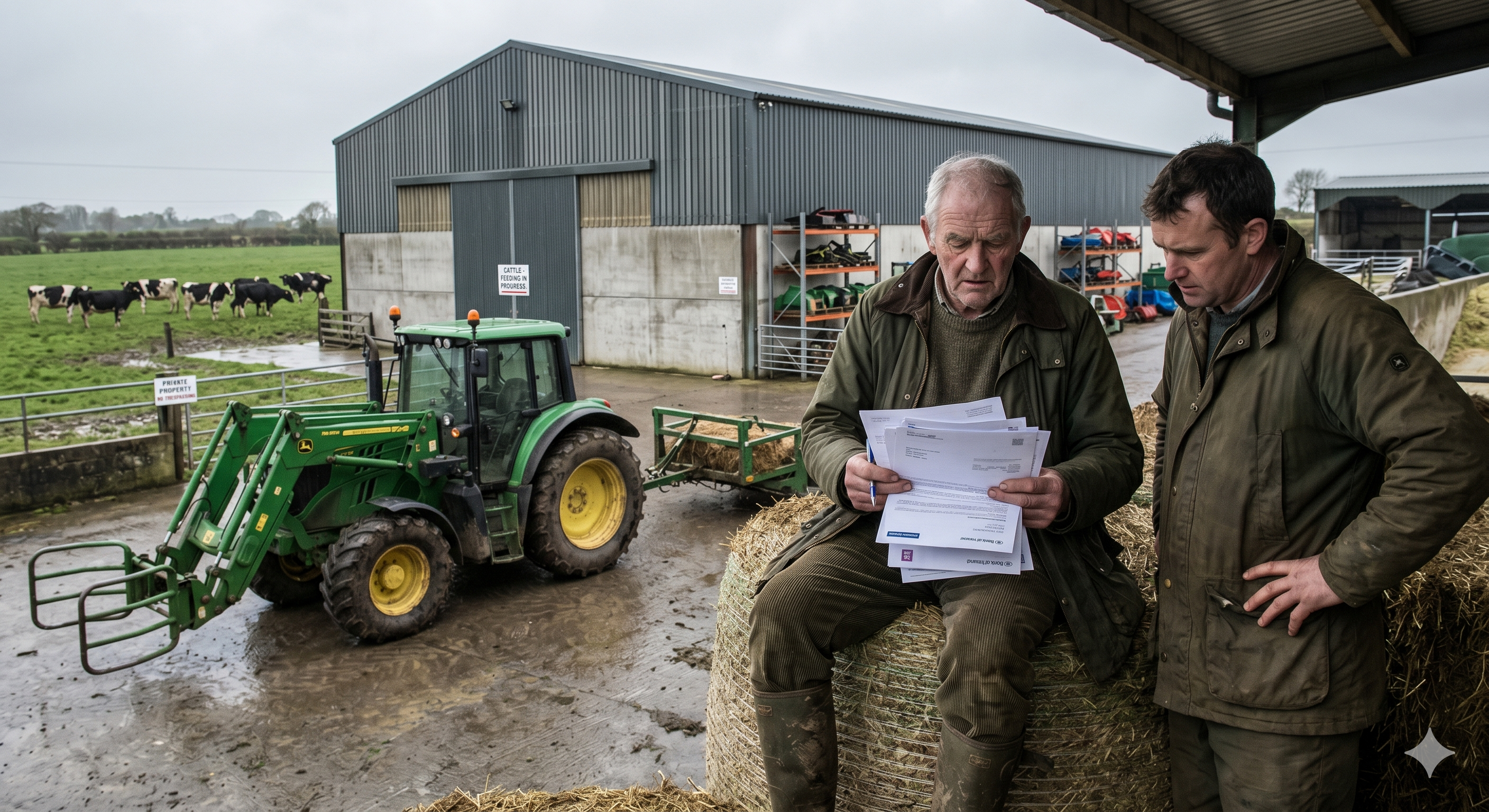
How Much Does a Farmer Actually Make?
While we see high prices at the store, most of that money goes to the stores and the factories, not the farmer. In the UK, for example, a beef farmer might only make 0.03% profit on a pack of burgers .
| Region | Mean Income (Local) | Mean (USD) | Median Income (Local) | Median (USD) |
|---|---|---|---|---|
| United Kingdom | £54,000 | $67,500 | £17,000 (Cereal) | $21,250 |
| Ireland | €80,000 (Dairy) | $86,400 | €27,250 (Beef/Sheep) | $29,430 |
| Australia | $126,000 AUD | $81,900 | $108,360 AUD | $70,434 |
| United States | $135,000 USD [10] | $135,000 | -$1,161 USD [11] | -$1,161 |
| Africa (Kenya) | KSh 364,000 | $2,800 | KSh 156,000 | $1,200 |
Notably, the median income figure for the United States indicates that the typical American farm is operating at a net annual loss from farming operations alone.[11]
Profit vs. Bankruptcy
Farmers are in a tough spot because their “bills” are rising faster than their income. If the total adjusted cost for the farm is higher than the income it brings in, the farmer is losing money on every acre. When this happens, they can no longer pay their debts and eventually go out of business.[22]
Agriculture & Crop Sector
| Region / Crop | Gross Inc/Acre | Break-Even (Old) | Crisis Incr. | Adj. Cost/Acre | NET LOSS |
|---|---|---|---|---|---|
| US (Corn) | $840 [2] | $905 [12] | +$50 | $955 | -$115 |
| UK (Wheat) | $784 | $814 | +$25 | $839 | -$55 |
| Brazil (Soy) | $612 | $602 | +$45 [13] | $647 | -$35 |
| Australia (Wht) | $353 | $353 | +$37 [14, 15] | $390 | -$37 |
| Kenya (Maize) | $540 | $420 [11] | +$120 | $540 | $0 |
| India (Wheat) | $334 | $147 | +$20 [12] | $167 | +$167 |
Livestock & Dairy Sector
| Region / System | Gross Inc/Unit | Break-Even (Old) | Crisis Incr. | Adj. Cost/Unit | NET LOSS |
|---|---|---|---|---|---|
| Ireland (Dairy) | $0.52/L | $0.45/L [16] | +$0.11/L [17] | $0.56/L | -$0.04/L |
| UK (Beef) | $1,250/H [15] | $1,420/H [18] | +$180/H [1] | $1,600/H | -$350/H |
| Australia (Beef) | $1,250/H [15] | $1,250/H [18] | +$170/H [14] | $1,420/H | -$170/H |
Will Farms Close Down?
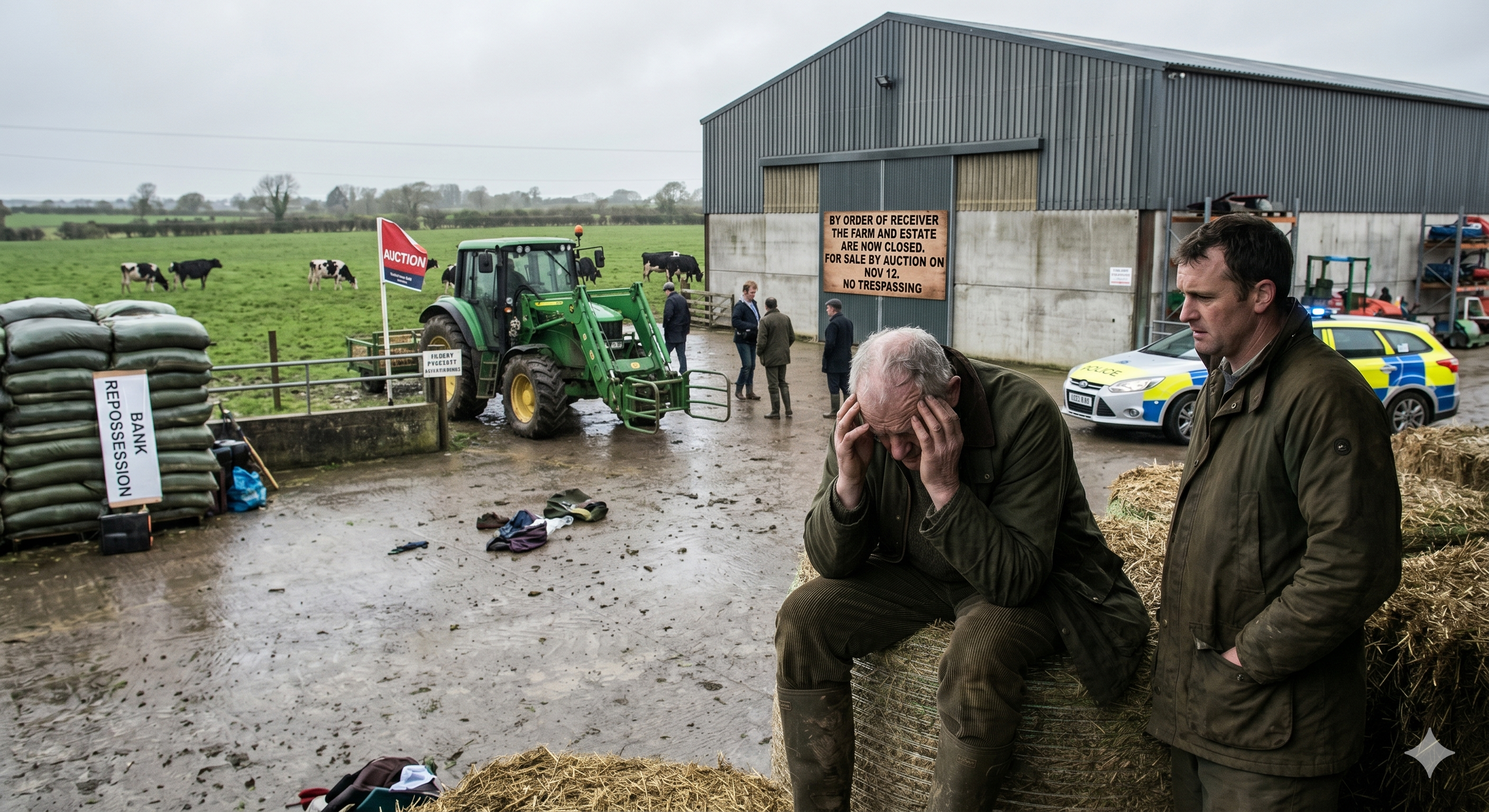
Farms only close because they are economically unviable. Many already have![19]
- United Kingdom: A record 6,270 farming and fishing businesses closed down between late 2024 and late 2025 .
- United States: Farm bankruptcies jumped 46% last year .
- Western Europe: Experts predict another 10,500 businesses in this region could fail over the next two years .
“Why would I work 80 hours a week, to operate a 2 million loss this year - when I can farrow the land and go work in the mines instead.”
It is important to note operating costs can close a farm. To reopen a farm requires buying land, machinary, and labor. No bank will extend a line of credit to fund reopening a farm that , mathematically speaking, is a loss making business.
If a farm closes it may never reopen! The damage done today may be lasting!
Conclusion: The Final Bill
The 2026 crisis isn’t just about higher prices today; it is about how we will eat tomorrow.
- The Headline Inflation: Global food prices are expected to rise by 4.4% on average this year . However, the UK is bracing for food inflation as high as 10.0%.[1]
- The Cost to Families: In Canada, groceries will cost $1,000 more this year.[7] In Ireland, families could pay over €500 extra per year.[20, 21] In Australia, families are now spending over $10,700 per year on food .
- The Hunger Crisis: An estimated 363 million people will face hunger in 2026.[7, 10] This includes 45 million additional people pushed into acute hunger solely because of the war and rising costs.
- Lasting Damage: If these farmers go out of business, the damage is permanent. We lose local farms that provide diverse food choices . When they close, we become entirely dependent on far-away countries for our dinner, and once a farm is sold and paved over, it is gone forever .
Unless the war ends and shipping returns to normal, the “domino effect” will continue to drive up your grocery bill and put the world’s food security at risk.
Works Cited
| Number | Cited Source | Article Name | URL |
|---|---|---|---|
| 1 | rbc.com | Trade Zone: A perfect storm rippling across the world’s food supply | Link |
| 2 | phycoterra.com | The 2026 Global Fertilizer Shortage and Maximizing Returns | Link |
| 3 | fdf.org.uk | FDF revises food inflation forecast to at least 9% by the end of 2026 | Link |
| 4 | agriland.ie | Irish farmers facing ‘significant pressure’ on fertiliser availability | Link |
| 8 | ers.usda.gov | Food Price Outlook - Summary Findings | Link |
| 9 | rfdtv.com | USDA Sees Food Prices Rising Again in 2026 | Link |
| 10 | lsuagcenter.com | Farm Input Expenses for 2026 and Projected | Link |
| 15 | jmrodgers.com | April 2026 Freight Market Update | Link |
| 23 | agrilife.org | Input Cost Outlook for 2026 - Ag Economics on the Plains | Link |
| 24 | manitobapulse.ca | Preliminary Outlook: Possible Cost Pressures in 2026 | Link |
| 29 | teagasc.ie | Agricultural outlook 2026 - a more challenging year in store | Link |
| 45 | ers.usda.gov | Farm Sector Income & Finances | Link |
| 53 | ag.purdue.edu | USDA’s First Forecast of the 2026 U.S. Farm Balance Sheet | Link |
| 57 | foodsecurityportal.org | Highlights Changing Maize Prices in East Africa | Link |
| 68 | fao.org | FAO Chief Economist warns of severe global food security risks | Link |
| 71 | brokernews.com.au | Farmland prices smash records as sales halve | Link |
| 142 | allianz-trade.com | Global Insolvency Report 2026 | Link |
| 1562 | finder.com.au | Average Grocery Bill Australia 2026 | Link |
More posts
Food and War - The Greatest Crisis Since COVID
2/4/2026
The devastating impact of war on farming costs and the inevitable global food shortage.
Grow the Expensive Parts: A Practical Home-Grown Menu for 2026
18/2/2026
Instead of replacing your weekly shop, grow the ingredients supermarkets mark up the most — herbs, greens, and fresh produce. A simple, practical grow plan.
Why Food Prices Stay High — And What You Can Actually Do
16/2/2026
Food inflation has slowed, but prices haven’t fallen. Here’s why your weekly shop still feels expensive — and how to respond practically.